


Rips by Triumph
Triumph Labs Inc.
Rips by Triumph is the kind of entertainment app that can turn a spare minute into a small ritual. I open it with the expectation of seeing what is inside a digital trading card pack, and the appeal is immediate: there is a clear moment of anticipation, a chance of finding something rare, and a direct connection between collecting and potential cash-out value. That combination makes it more engaging than a simple card gallery, but it also means I have to judge it differently from a normal streaming or casual entertainment app.
My first impression is that this is not really about quietly browsing cards. The central experience is the reveal itself. You make a choice, open a pack, and react to the result. When the outcome feels exciting, the app has a strong rhythm. When the result is ordinary, the experience depends on whether I am still interested in building a collection or whether I was only chasing the next surprising pull. That distinction becomes important after the first week.
Triumph Labs Inc. presents the app as a free entertainment product for mature users, and it is available for Android devices running at least version 7.0. The mature 17+ rating is worth taking seriously because the cash-out element changes the tone. I would not treat this as a harmless children’s card-opening toy, and I would keep it separate from any account or spending habits used by younger family members.
Why the first week feels so compelling
The first several sessions are driven by discovery. I am learning how the pack-opening flow works, what kinds of cards appear, and how the app connects a digital pull with the possibility of receiving real money. That last part is what separates Rips by Triumph from a conventional collection app. In a standard card game, a duplicate or low-value card may still have a role in a deck. Here, the emotional weight is more concentrated in the reveal and in what I can do with the result afterward.
That makes the app easy to understand without making it shallow. A new user does not need to learn a complicated game board before getting to the main attraction. The experience is closer to a repeated decision-and-reveal loop, which is useful when I only have a short break. I can check in during a commute, between tasks, or while waiting for an appointment without committing to a long match.
Related News

Why WhatsApp Messenger Still Makes Everyday Communication Feel Easy

Jurassic World: The Game Is the Better Dino Tycoon for Strategic Players

Threads in Real Life: Who Should Join, Lurk, or Leave

How SHEIN Turned Shopping Into an Endless Content Feed

How to Make Fortnite Feel Smarter on Mobile

Should You Switch to Microsoft Outlook on Mobile?
The strongest early use case is for someone who already enjoys trading cards but does not always want to sort physical binders, visit a shop, or follow a full competitive game. The app offers a more immediate version of the collecting thrill. It is also more convenient than keeping physical packs nearby, because the entire activity stays on the phone and the possible cash-out is part of the same overall experience.
Still, I would not confuse convenience with guaranteed value. The right mindset is to see each opening as entertainment first. The possibility of cashing out can make a good pull feel more meaningful, but it should not turn the app into a personal income plan. If I opened it expecting every session to produce something worthwhile, the novelty would disappear quickly.
One practical habit helped me enjoy the first week more: I treated the reveal screen as the end of a session rather than immediately looking for another opening. That small pause makes it easier to notice whether I am actually enjoying the collection or simply reacting to anticipation. It also creates a natural stopping point, which matters in any app built around repeated outcomes.
Gallery
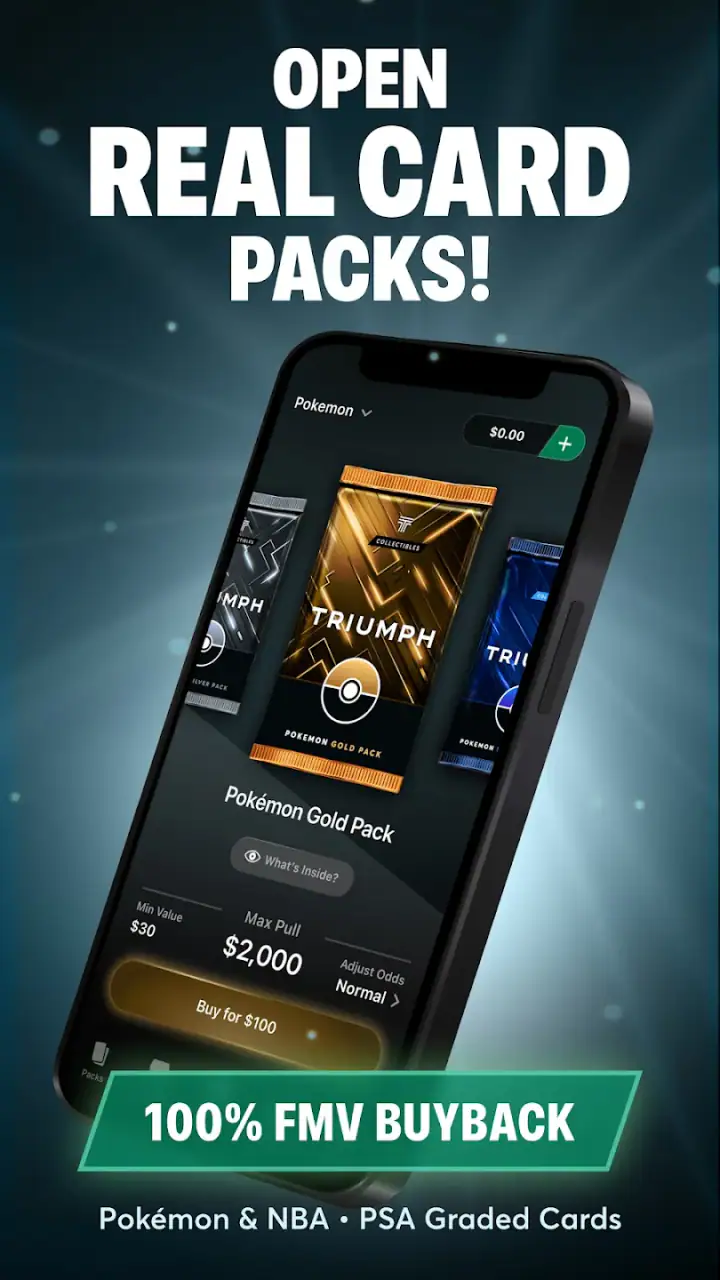
The app’s audience size suggests that this format has broad appeal. It has passed a million installs, carries an average rating of 4.6 from around 43 thousand ratings, and has roughly 6 thousand written reviews. Those figures do not guarantee that it will suit me personally, but they do indicate that the basic concept is easy for many people to understand and return to.
The difference between collecting and chasing
During the first days, I found it useful to decide what I actually wanted from the experience. There are at least three different motivations: enjoying the reveal animation or moment, building a personal set of cards, and trying to turn a desirable pull into money. The app can serve all three, but they do not create the same kind of satisfaction.
If I care mainly about collecting, I can judge a session by whether I found something interesting, even if it is not the rarest result. If I care mainly about cashing out, I am more likely to focus on value and speed. That second approach is more demanding because every ordinary outcome feels like a disappointment. My honest recommendation is to begin with the collector mindset and only consider cash-out as an additional option.
A second useful habit is to keep a simple personal record of what I have opened and why I opened it. This does not require a complicated spreadsheet. A note with the date, the pack or action involved, and whether the result felt worthwhile is enough. After several sessions, patterns become easier to see: perhaps I enjoy the anticipation but rarely care about the cards afterward, or perhaps I am more interested in specific pulls than in repeated openings.
That kind of self-check is especially valuable because the app is designed around uncertainty. The excitement comes from not knowing the result, but uncertainty can also make it difficult to recognize when a session has stopped being fun. Rips by Triumph works best when I decide my stopping point before the anticipation takes over.
What remains useful after the novelty fades
The more important question is whether the app earns a permanent place on my phone after the first week. My answer is conditional. It has recurring value for people who genuinely enjoy card collecting and like checking for new opportunities to open packs or cash out. It is less convincing for someone who wants a deep game, a social community, or a long-term progression system that gives every ordinary result a clear purpose.
Compared with video entertainment, the app is more interactive but less predictable. A film or short video gives me a complete experience without asking me to make another decision. Rips by Triumph gives me a small event to participate in, which can be more memorable, but the satisfaction depends heavily on the result. Compared with a physical card collection, it is faster and less cluttered, yet it lacks the tangible feeling of holding, sorting, and displaying cards.
Compared with a traditional digital card game, the difference is even clearer. A card battler gives duplicate cards and weaker cards a possible strategic function. Rips by Triumph is centered on opening and value rather than using cards in a detailed match. I would choose the app for the thrill of discovery and the cash-out angle, but I would choose a full card game if I wanted deck building, tactical decisions, and a reason to study every card.
Month to month, the app needs a personal routine to stay relevant. I would not open it automatically every time I unlock my phone. Instead, I would use it as an occasional check-in: perhaps after a particular collecting goal, when I have a few uninterrupted minutes, or when I am curious whether a new pull changes what I want to do next. That approach protects the experience from becoming background tapping.
The cash-out promise also creates a practical question: how much effort is involved between finding a desirable card and receiving money? I would approach that part carefully and read every screen before confirming anything. A user should understand the steps, review the destination details, and keep expectations realistic. The feature is attractive because it connects collecting with real-world value, but that connection deserves more attention than a normal in-app reward.
Another point I would keep in mind is that “free” describes the listed price, not the emotional cost of repeated attempts. Even when an app has no purchase price, a loop based on rare outcomes can encourage more frequent checking. I would set a clear personal limit on time and any optional spending before using it regularly. That is not a criticism unique to this app; it is simply the sensible way to use any entertainment built around anticipation and variable results.
A routine that keeps the app from becoming background noise
For lasting value, I would use a three-step routine. First, decide what I am looking for before opening anything. Second, stop after a defined number of actions or after reaching a satisfying result. Third, review the card or cash-out decision separately instead of making it impulsively during the excitement of the reveal.
This routine has a useful trade-off. It reduces the spontaneous thrill of opening “just one more,” but it makes the sessions more intentional. It also helps answer whether the app is still earning its place on my phone. If I repeatedly open it without remembering what I hoped to find, the habit is probably being maintained by anticipation alone.
For a collector, a monthly review can be more useful than daily checking. I can look back at which cards mattered, which results were duplicates or disappointments, and whether the cash-out process added genuine satisfaction. That turns a series of short reactions into a clearer judgment about value. It is one of the less obvious ways to keep a novelty-driven app from quietly taking over spare moments.
Maintenance, friction, and the reasons fatigue appears
Rips by Triumph is simple to enter, but simplicity does not mean zero maintenance. I still need to keep track of what I have pulled, decide what I want to retain, and think carefully about when cashing out makes sense. If I ignore those decisions, the collection can become a stream of disconnected results rather than something I understand.
The cash-out feature is also where I would expect the most user attention. A card may feel exciting at the moment of discovery, but the useful outcome depends on completing the next steps correctly. I would check the app’s instructions each time they change, avoid rushing through confirmation screens, and make sure I am comfortable with the destination for any payment. The fact that money is involved means a few extra seconds of caution are worthwhile.
Another source of friction is the gap between a rare pull and a meaningful long-term collection. If the app does not give me a reason to care about ordinary cards beyond their immediate value, repeated sessions can start to feel flat. This is where a physical collection or a full digital card game may be stronger. Physical cards offer ownership and display; a competitive game gives cards a role in play. Rips by Triumph depends more on my personal interest in the opening and the outcome.
Fatigue can also come from checking too often. The first few openings feel distinct because everything is new. Later, the reveal pattern becomes familiar, and I begin evaluating the app almost entirely by the result. If the result is not compelling, the session has little else to carry it. I would therefore avoid using it as a default boredom cure. It is better as a deliberate activity with a beginning and an end.
People who dislike financial uncertainty should probably skip this app, even if they enjoy trading cards. The mature rating is not just a label to ignore; it reflects the fact that the experience involves real-money considerations. Likewise, anyone looking for a guaranteed return, a traditional game campaign, or a rich card-battle system will likely be happier elsewhere.
On the other hand, I think it is a good fit for an adult collector who wants a quick digital ritual and understands that the entertainment comes from the process, not from assuming every opening will be profitable. It can also suit someone who has limited storage space and prefers the convenience of managing the experience on a phone. The key is accepting its narrow focus instead of expecting it to replace every other form of card entertainment.
Who should keep using it
I would keep Rips by Triumph installed if I enjoyed the reveal even when the result was ordinary, had a clear reason to check my collection, and could treat cash-out as an option rather than a target. Those three conditions create a healthier long-term relationship with the app.
I would remove it or use it only occasionally if I found myself opening it automatically, feeling frustrated after normal results, or spending more time thinking about the next pull than enjoying the cards already found. That is the point where the app has stopped serving my entertainment and started directing my attention.
The current version is 1.40.0, and the developer is Triumph Labs Inc. I would keep the app updated through the normal store process, particularly because an experience involving account actions and cash-out benefits from using the current version. I would also check that my device meets the Android requirement before installing, since older systems can create avoidable compatibility problems.
My long-term verdict on Rips by Triumph
After the initial excitement, I see Rips by Triumph as a focused entertainment app rather than a complete collecting ecosystem. Its best quality is the directness of the experience: I can move quickly from curiosity to a pack reveal, and the possibility of cashing out gives certain results more weight than they would have in a purely decorative collection.
Its weakness is the same feature that makes it appealing. When the reveal is the main event, ordinary sessions can lose their energy. Without a personal collecting goal or disciplined routine, the app risks becoming repetitive. It also asks me to be more careful than I would be with a standard casual game because real money is part of the promise and the audience is restricted to mature users.
I would recommend it to an adult who already likes trading cards, wants a phone-based alternative to physical packs, and can set boundaries around repeated openings. I would not recommend it to someone seeking strategy, guaranteed value, a family-friendly experience, or a deep reason to return every day. For those needs, a conventional card game, a physical collection, or a standard entertainment app is a better choice.
My final judgment is that it can earn lasting space, but only as an occasional, intentional habit. The first week supplies the strongest rush; the following months depend on whether I create my own reasons to return. If I use it to check a specific collection goal, enjoy a measured reveal, and handle cash-out decisions carefully, it remains distinctive. If I use it whenever I am bored and chase the next rare result, the novelty fades much faster.
That makes the app worth trying for the right person, especially because it is free to install and already has a substantial audience. I would simply approach it as card-opening entertainment with a possible cash-out outcome, not a dependable way to make money. In my experience, that expectation keeps the fun intact and makes it much easier to decide whether the app still deserves attention once the first excitement has passed.
FAQs for Rips by Triumph
What is Rips by Triumph, and what can I do with it?
Rips by Triumph is a mobile app connected to Triumph’s motorcycle ecosystem, designed to support riders with useful information and digital services. Depending on your motorcycle, location, and app version, it may provide access to riding-related content, vehicle information, service resources, events, and other brand features. The exact tools available can vary, so checking device and motorcycle compatibility before downloading is recommended.
Is Rips by Triumph compatible with every Triumph motorcycle?
Compatibility is not necessarily universal across all Triumph motorcycles, model years, markets, or connected features. Some functions may require a specific motorcycle, approved accessory, account type, or compatible smartphone connection. Before installing the app, review the current requirements in the Google Play Store or Apple App Store and confirm that your Triumph model and phone are supported in your country.
Does Rips by Triumph require an account or an internet connection?
Many of the app’s personalized features may require users to create or sign in to a Triumph account. An internet connection is generally needed for downloading content, synchronizing information, receiving updates, and accessing online services. Certain information may remain available after loading, but users should not assume that every feature works offline. Mobile data usage can also vary depending on how the app is used.
Is Rips by Triumph free to download and use?
The app may be available as a free download, but that does not automatically mean every related service is free. Some functions can depend on motorcycle equipment, connected services, regional availability, dealership support, or separately purchased products. Review the app-store listing and any in-app terms carefully before relying on a feature, especially if it involves subscriptions, accessories, data services, or optional Triumph services.
Is Rips by Triumph safe and useful while riding?
Rips by Triumph can be useful before and after a ride, but riders should avoid interacting with the phone while the motorcycle is moving. Enter destinations, review information, and adjust settings only when safely parked. The app should complement, not replace, responsible riding, road signs, the motorcycle handbook, or professional service advice. Availability and accuracy of digital information may also depend on connectivity and location.
Pros
- Smooth
- responsive controls make short sessions easy to pick up.
- Distinctive visual style gives the game a memorable arcade identity.
- Levels encourage replaying to improve timing and personal scores.
- Runs well on many devices without demanding flagship hardware.
- Simple gameplay makes it accessible to players of different skill levels.
Cons
- The core mechanics may feel repetitive after extended play.
- Progression can seem limited for players seeking long-term depth.
- Some challenges rely heavily on precise timing and trial and error.
- The interface may take a little time to understand at first.
- Players looking for multiplayer features may find the experience too solitary.


